
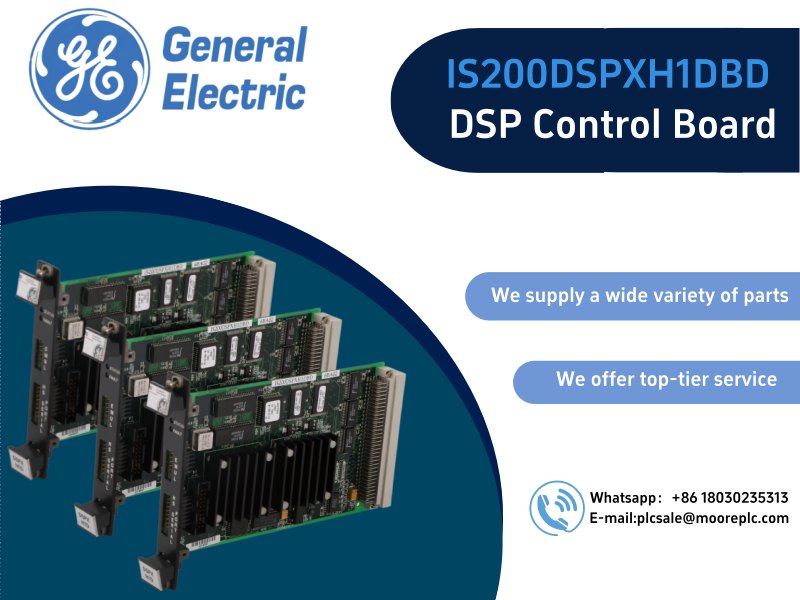
The GE IS200DSPXH1DBD DSP Control Board is redefining efficiency and reliability in industrial automation. Designed to deliver precise digital signal processing (DSP) capabilities, it addresses the growing demand for high-performance turbine, generator, and industrial machinery control. Its robust architecture ensures seamless integration with existing control systems, minimizing downtime and enhancing overall operational efficiency. Why Upgrading to the IS200DSPXH1DBD Is Critical for Modern Industrial Operations Industries increasingly face challenges such as aging control hardware, unpredictable system performance, and escalating maintenance costs. The IS200DSPXH1DBD offers a forward-looking solution by providing high-speed processing, advanced fault diagnostics, and reliable real-time control. Upgrading to this control board enables predictive maintenance, reduces unscheduled outages, and improves the longevity of critical assets. Where Can the IS200DSPXH1DBD Deliver Maximum Value? This control board is ideal for high-demand industrial environments, including power generation plants, turbine control systems, and complex manufacturing facilities. Its compatibility with distributed control systems (DCS) and integration with other GE control modules makes it suitable for both retrofit projects and new installations. When Is the Right Time to Implement DSP Control Board Upgrades? Operators should consider upgrades during scheduled maintenance cycles, system modernization initiatives, or when performance monitoring indicates frequent operational deviations. Implementing the IS200DSPXH1DBD proactively ensures uninterrupted production and avoids costly emergency replacements. Which Features Set the IS200DSPXH1DBD Apart from Conventional Control Boards? Key differentiators include: ●High-speed DSP processing for real-time control and monitoring ●Advanced fault diagnostics with event logging ●Wide operating temperature range suitable for harsh environments ●Seamless system compatibility with existing control infrastructure ●Long-term reliability reducing lifecycle costs Who Benefits Most from the IS200DSPXH1DBD? Maintenance engineers, plant operators, and industrial system integrators benefit directly from its enhanced performance and diagnostics capabilities. The board also empowers decision-makers by providing actionable operational data that supports efficiency improvements and risk mitigation. How the IS200DSPXH1DBD Helps You Achieve Operational Excellence By integrating the IS200DSPXH1DBD into your control system, you gain: ●Enhanced precision control for turbines and industrial machinery ●Reduced downtime through predictive maintenance alerts ●Simplified troubleshooting with comprehensive diagnostics ●Increased ROI via improved efficiency and asset longevity In an era where industrial systems demand higher performance and reliability, the GE IS200DSPXH1DBD DSP Control Board provides a comprehensive solution that aligns with modern operational cha...